AI for Compliance: Solving the Real Problem — Manual Evidence
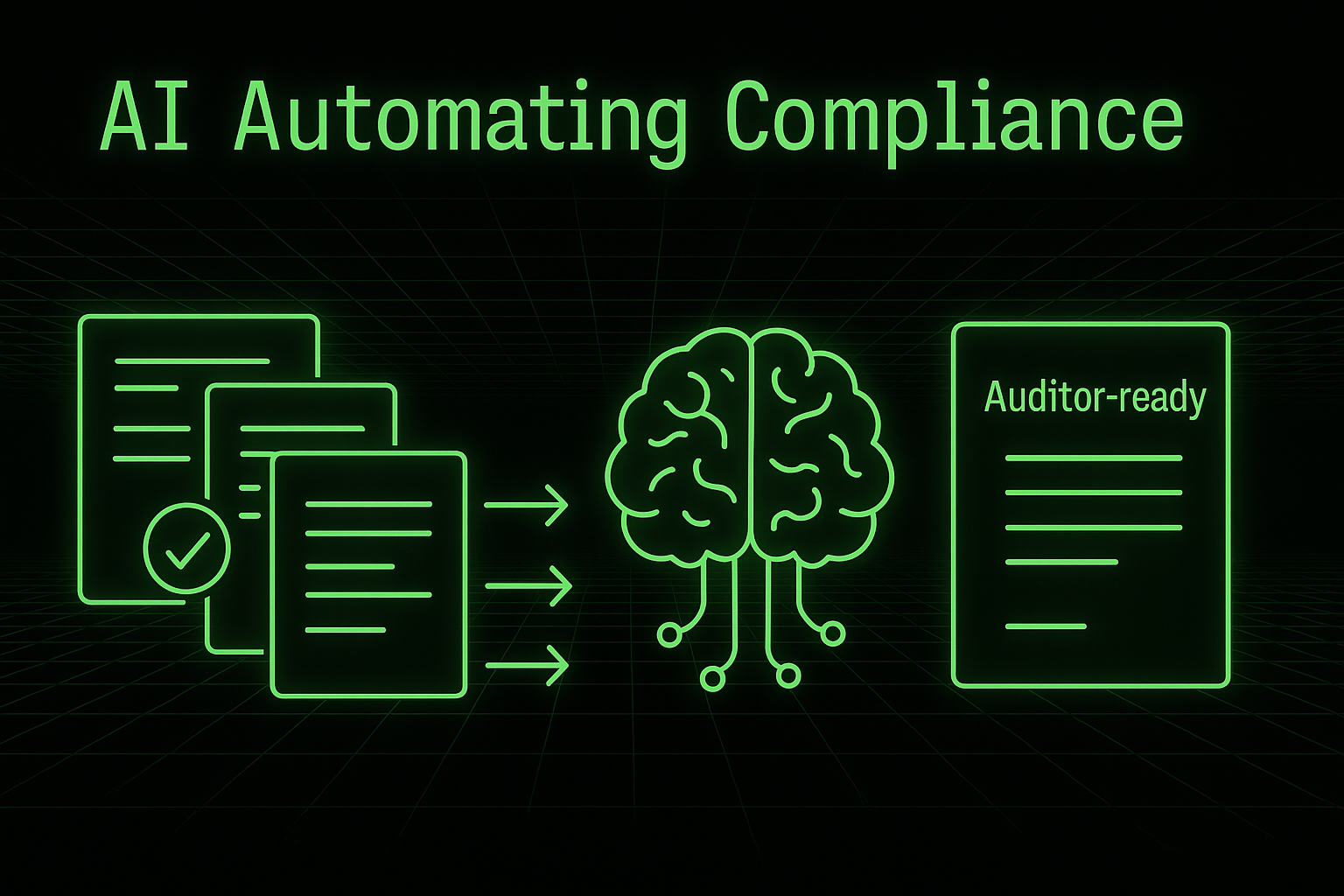
Compliance is rarely a technology problem—it’s a manual evidence problem.
Engineering and security teams spend countless hours collecting screenshots, pulling logs, validating configurations, scraping consoles, and formatting documents for auditors. None of this improves security. None of it reduces risk. It’s administrative overhead disguised as “compliance work.”
AI won’t replace GRC teams or eliminate human judgment, but it will replace the repetitive, mechanical evidence-gathering tasks that drain engineering time and slow down audits.
The future of compliance isn’t paperwork.
It’s automation augmented by AI, turning compliance into a continuous signal instead of a yearly scramble.
Why Traditional Compliance Feels Broken
Even mature organizations run into the same recurring bottlenecks:
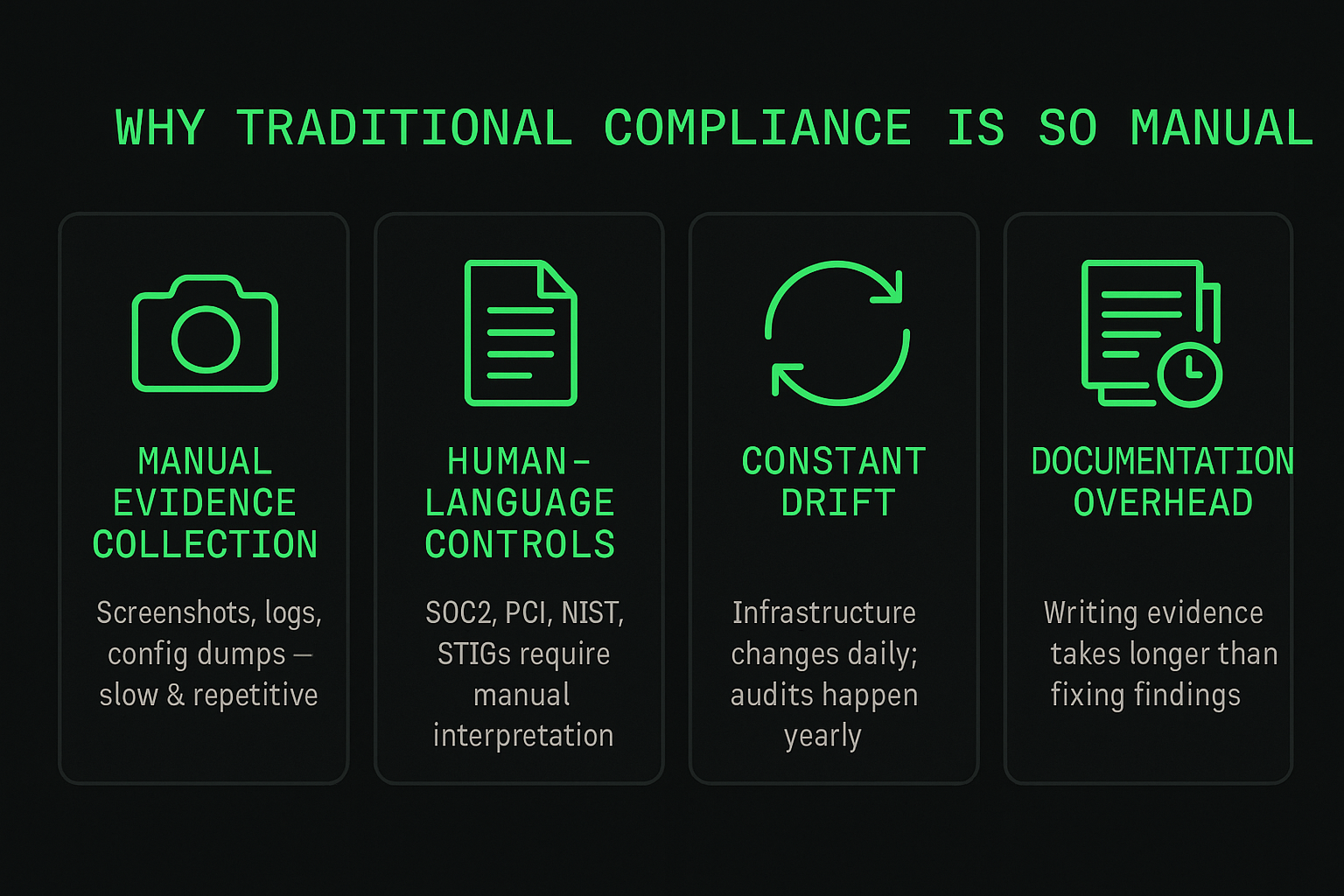
1. Evidence Collection Takes Too Long
Screenshots, console exports, ticket logs, config dumps—none of it scales. Every audit demands more of it.
2. Controls Are Written in Human Language
SOC2, PCI, NIST 800-53, DoD STIGs—none of these frameworks were designed to be machine-readable. Humans must interpret every requirement before validation begins.
3. Drift Happens Constantly
Infrastructure changes daily.
Auditors review once a year.
That mismatch guarantees findings unless continuous monitoring exists.
4. Documentation Takes Longer Than the Fix
Most engineers don’t mind remediating findings.
What they hate is proving they fixed them.
This is where AI finally changes the game.
Where AI Fits in Modern Compliance Pipelines
AI isn’t magic—it’s a force multiplier that removes friction across the entire compliance lifecycle.
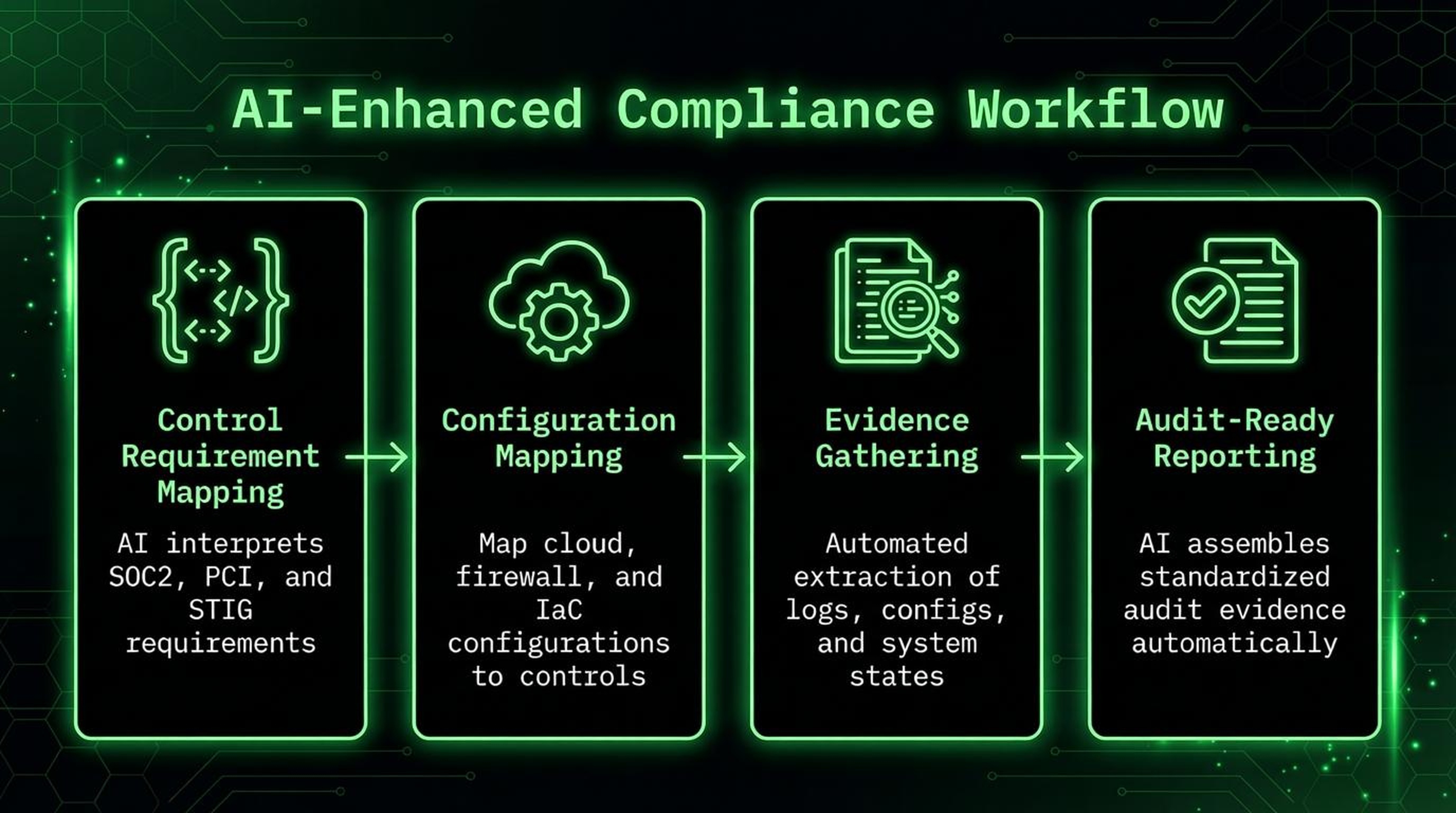
1. Automated Parsing of Control Requirements
AI can turn ambiguous human-language requirements like:
“Ensure logging is enabled for all security groups and access keys are rotated every 90 days.”
into structured, machine-friendly checks:
- CloudTrail enablement
- IAM access key rotation age
- Security group rule deltas
This is especially powerful for DoD STIGs, where “check” text is dense, inconsistent, and difficult to interpret manually.
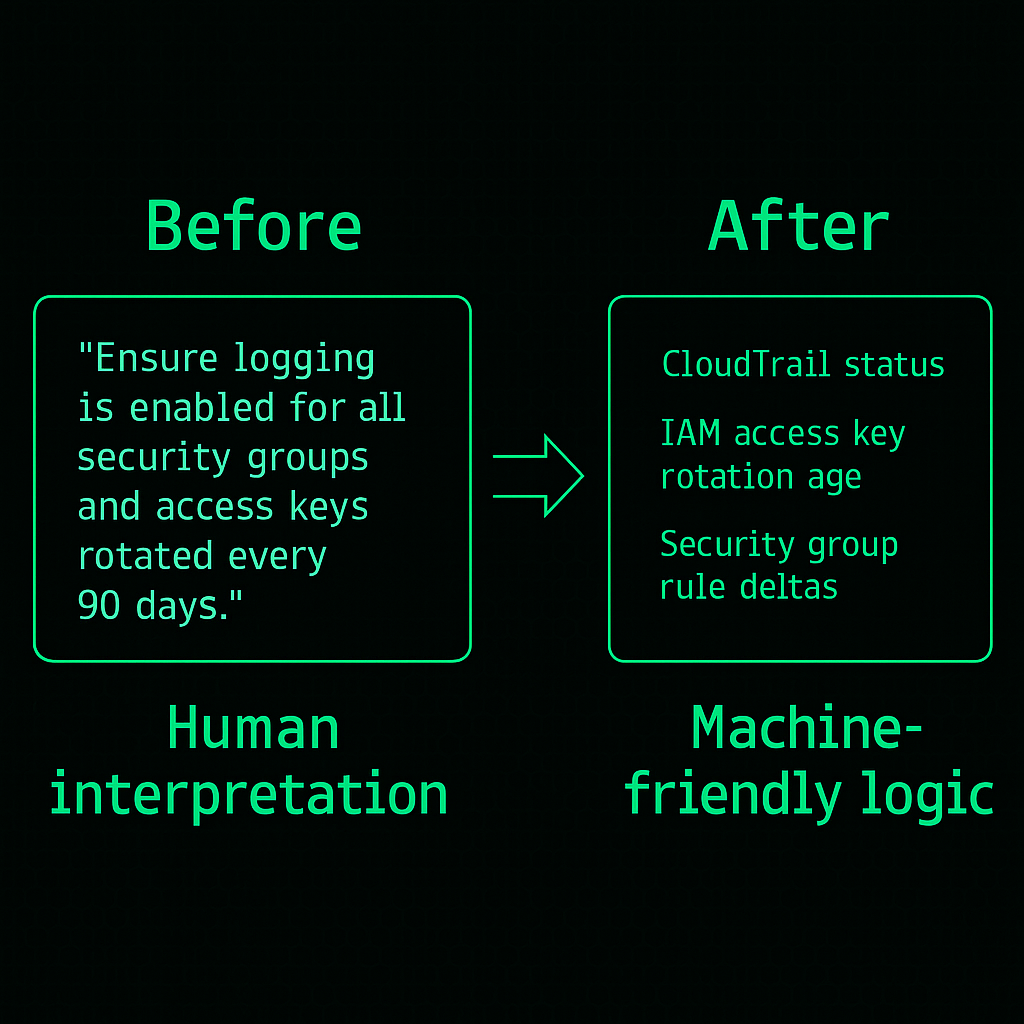
2. Mapping Configurations → Controls → Evidence
AI can analyze:
- Cloud resource states
- Firewall configurations
- CI/CD security settings
- Terraform plans
- Kubernetes manifests
…and automatically map them to the correct controls.
This eliminates hours of human cross-referencing and reduces interpretive errors.
3. AI-Assisted STIG Interpretation
STIGs are notoriously painful. AI helps by:
- Interpreting “check” logic
- Mapping requirements to Palo Alto configs, AWS resources, OS settings, etc.
- Identifying compliant vs. non-compliant states
- Generating remediation guidance
Your own STIG automation work is a perfect example of this impact in practice.
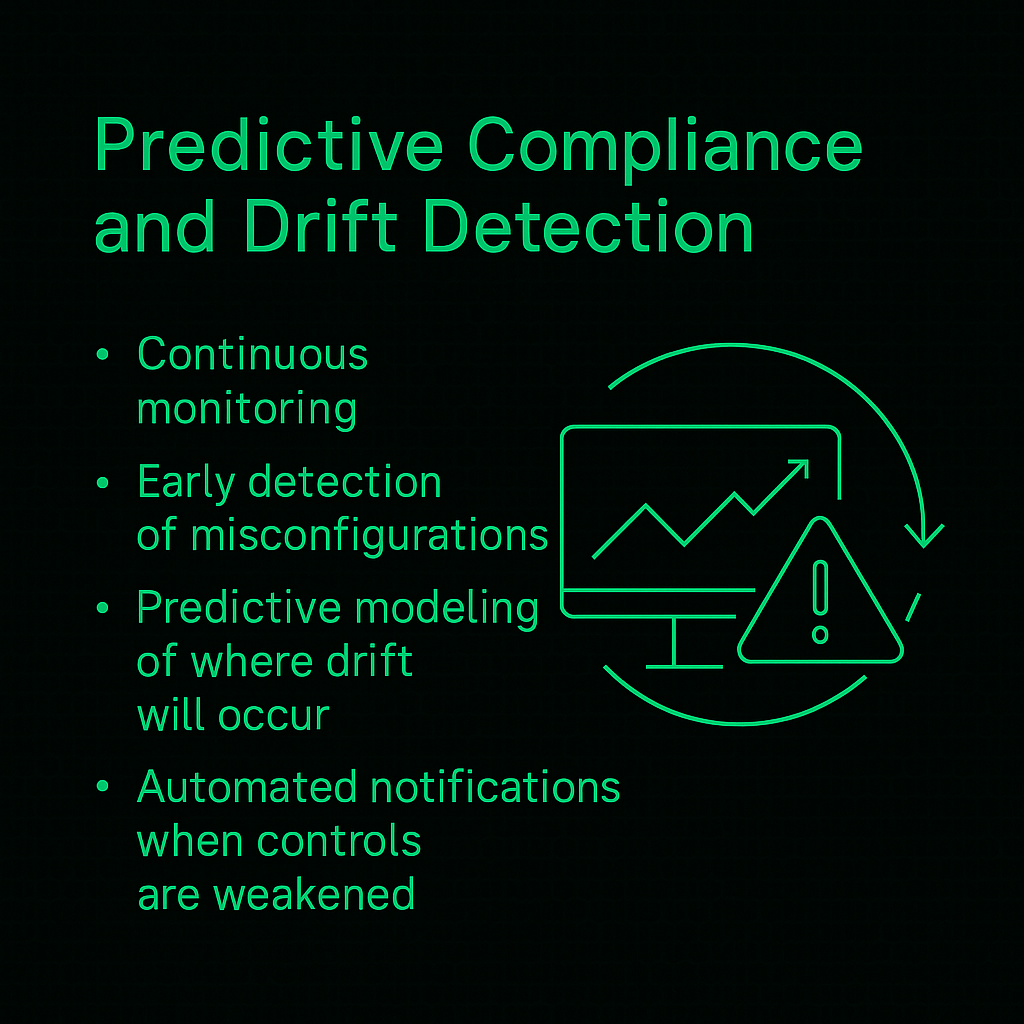
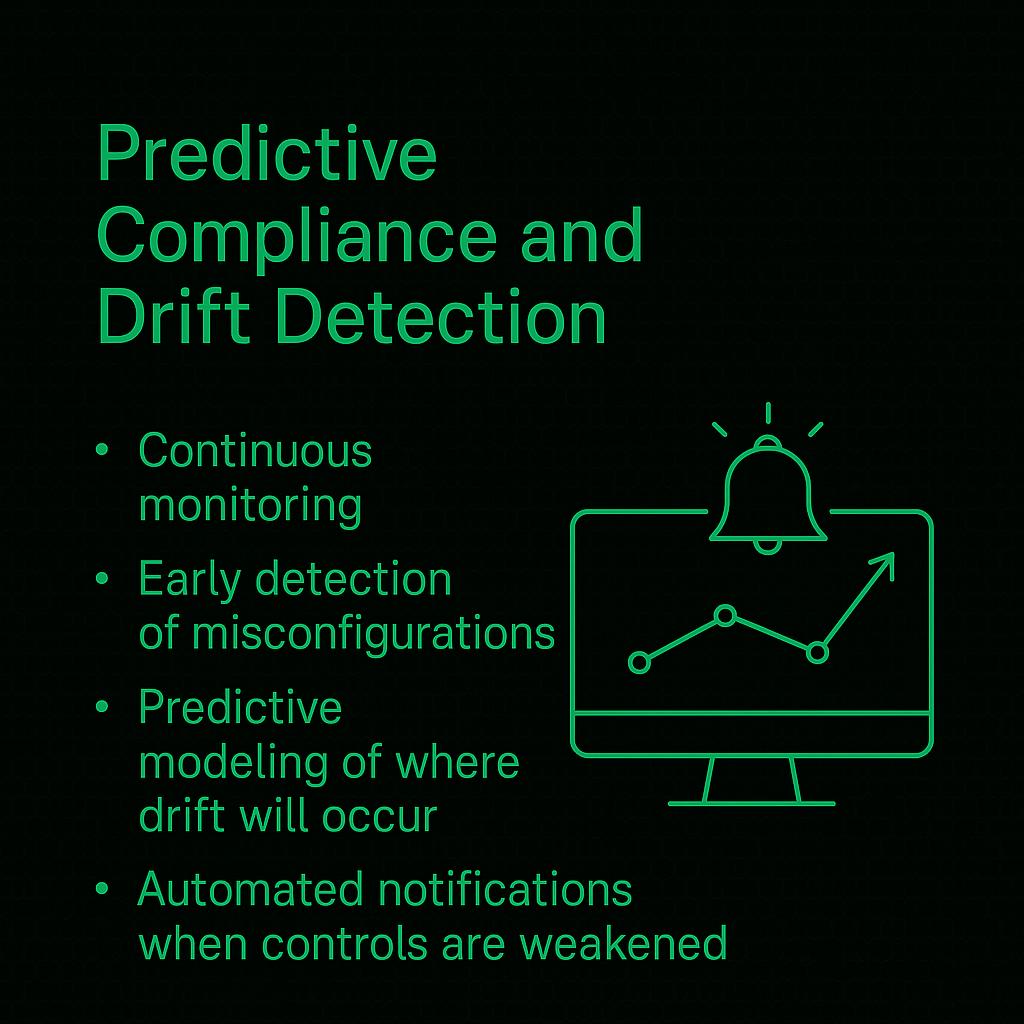
4. Predictive Compliance and Drift Detection
Compliance shouldn’t be point-in-time.
AI enables:
- Continuous control monitoring
- Early detection of misconfigurations
- Predictive modeling for drift
- Automatic notifications when posture degrades
This becomes the foundation for continuous compliance.
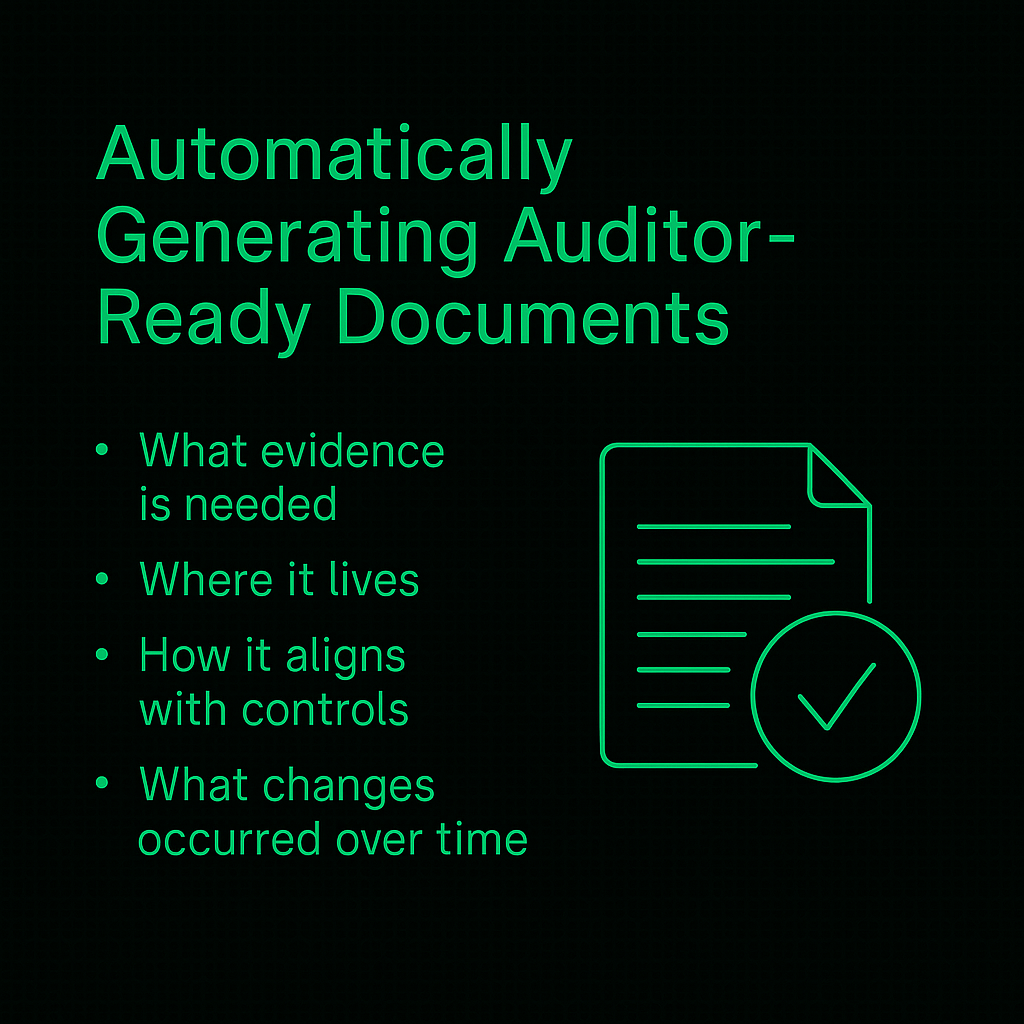
5. Automatically Generating Auditor-Ready Documents
This is where organizations save the most time.
Once AI understands:
- What evidence is required
- Where it lives
- How it maps to controls
- What changed over time
…it can prepare audit-ready documentation in seconds.
Human teams validate the output—AI assembles it.
Real Example: Cutting SOC2/PCI Prep From Weeks to Hours
In a prior NASDAQ-listed environment, automated evidence pipelines handled:
- Hardware/software inventories
- Firewall configuration collection
- Password policy validation
- Encryption requirement checks
- IAM and permission state exports
This alone reduced audit prep from weeks to hours.
With today’s AI tooling:
- Evidence becomes normalized automatically
- Controls are mapped without manual interpretation
- Reports are formatted consistently
- Findings come with remediation context
- Drift is caught before auditors catch it
This is compliance treated as a data problem, not a documentation exercise.

AI + DevSecOps: Compliance as Code
DevSecOps made security proactive.
AI makes it intelligent.
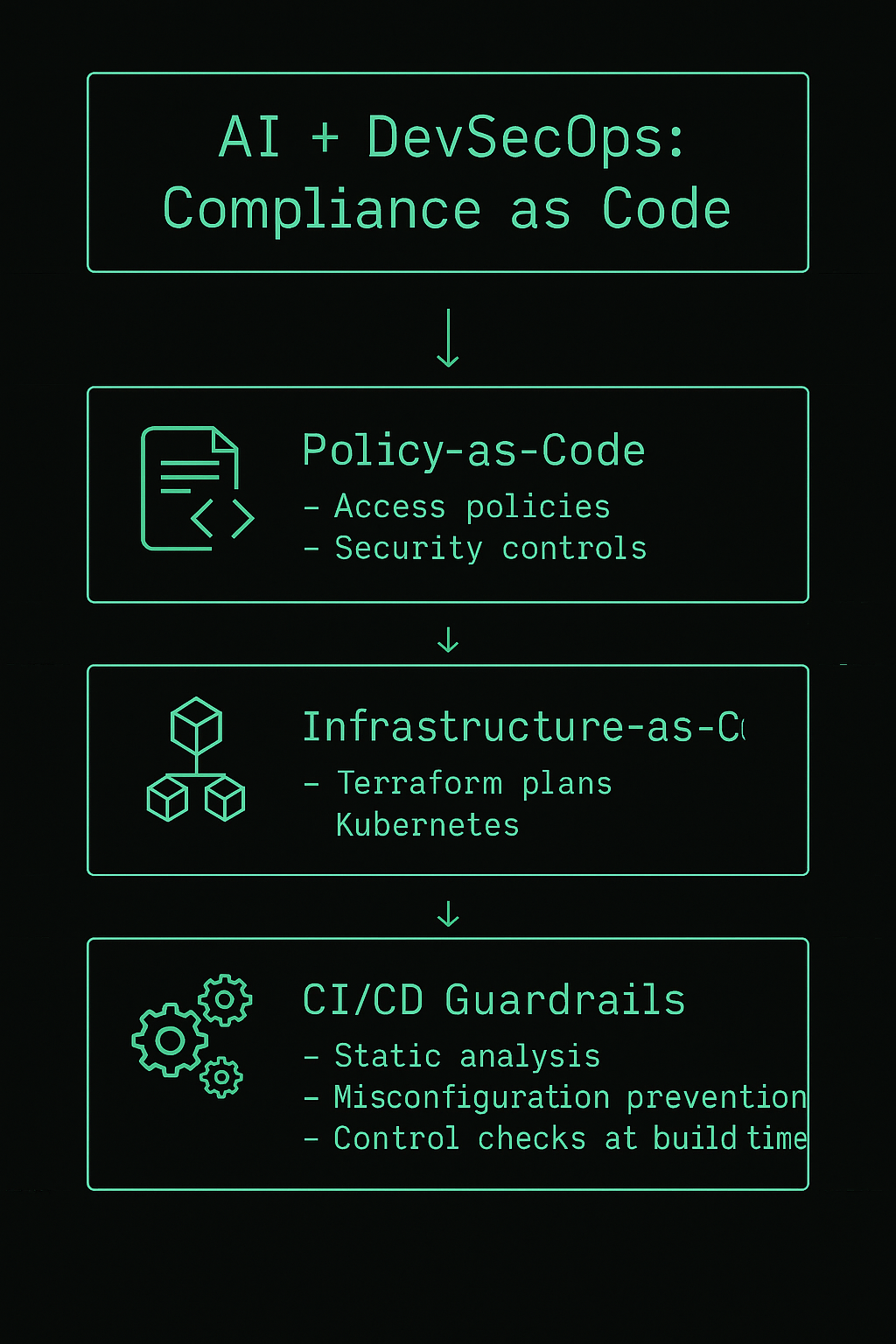
1. Policy-as-Code Enhanced by AI
AI can generate, validate, and update policies automatically.
2. CI/CD Guardrails
Using static analysis and pattern detection, AI flags:
- Misconfigurations
- Control violations
- Deployment risks
before code merges.
3. IaC Compliance
Terraform, Kubernetes, and YAML manifests can be validated dynamically against frameworks.
4. Drift Detection Built Into Delivery
If something deviates from the approved baseline, AI raises the alert instantly.
This is how compliance shifts left—without burdening engineers.
Risks, Limitations, and Guardrails
AI is powerful, but it isn’t infallible. Guardrails matter.
1. Determinism Matters
Auditors require repeatable, consistent outputs.
AI must be stable—not unpredictable.
2. Evidence Must Have Provenance
Every artifact should include:
- Source
- Timestamp
- Validation method
3. Humans Still Determine Risk
AI cannot judge mission impact, business criticality, or acceptable exceptions.
4. Guardrails Prevent “Compliance Theater”
Clear logic → reproducible outcomes → trustworthy results.
AI accelerates compliance.
Automation scales it.
Humans validate it.
The Future of Compliance: 3–5 Years Out
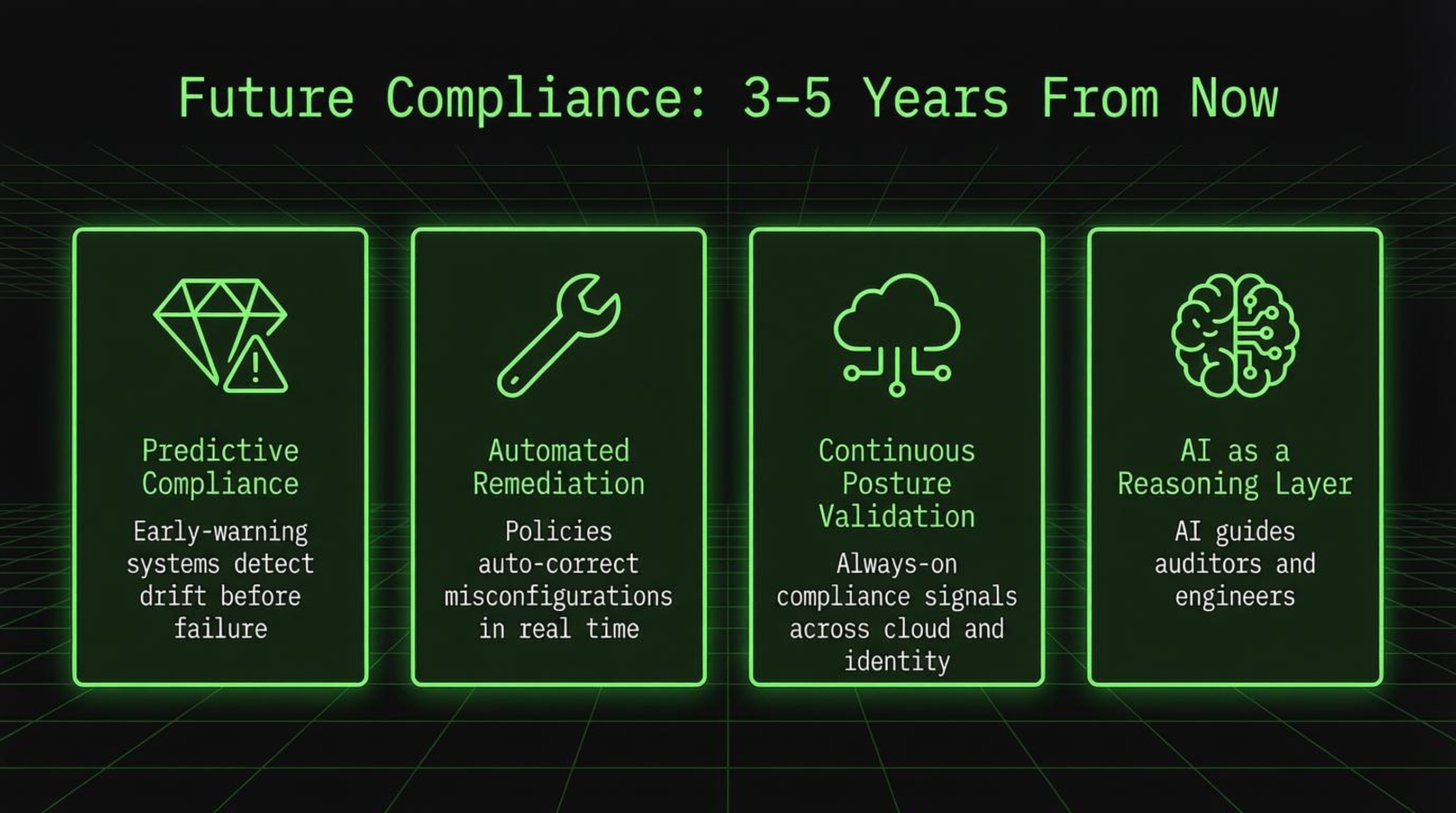
We’re heading toward:
🔹 Predictive Compliance
Systems that warn you weeks before drift occurs.
🔹 Automated Remediation
Policies that self-correct configurations in real time.
🔹 Continuous Posture Validation
Real-time compliance signals across cloud, network, and identity layers.
🔹 AI as a Reasoning Layer
AI won’t replace auditors—it will guide them, offering context and clarity instantly.
💬 Enjoying this article? Follow me on LinkedIn for more DevSecOps, automation, and AI-in-compliance insights:
https://www.linkedin.com/in/william-j-saraiva-52093b51
Conclusion
The future of compliance isn’t about automating screenshots or assembling another PDF for auditors.
It’s about turning compliance into a continuous, intelligent, automated signal that reduces risk and empowers engineering and security teams.
AI isn’t replacing compliance work.
It’s removing bottlenecks, accelerating audits, and freeing teams to focus on what matters:
security, governance, and resilience.
Compliance shouldn’t slow companies down.
With AI and automation, it becomes a force multiplier.
☕ Support ThinkNest
If you find this work valuable, share it or follow for more content on DevSecOps, automation, cloud security, and AI-driven compliance.
✍️ Author

William J. Saraiva
Senior DevSecOps Engineer & Founder Contributor @ Th1nkN3st
🔗 LinkedIn: https://www.linkedin.com/in/william-j-saraiva-52093b51